
KAMIAOYAGI MODEL
The Kamiaoyagi Model
The Kamiaoyagi Model is our work in the Kamiaoyagi district of Ishioka, Ibaraki, where YASABI is based: studying and assessing the character of each piece of land, then planning and putting into practice a present-day use that suits it.
Rice paddies, wetlands, bamboo groves, forests, houses and gardens: each piece of land has its own nature. Some suit producing materials, some should be kept as a home for living things, and some suit people gathering and spending time. Giving up on human use and, with proper care, returning land to the deep mountains is also one of the choices.
We are not aiming for complete preservation. Apart from the places we decide to return to the mountains, we see the land as a place of human life too. Within that, we hope to explore and give shape to a present-day relationship with the land.
The bamboo, thatch grass, rice straw and sawmill offcuts that come out of our work are treated as materials for architecture, civil works, landscaping and farming, and used in the projects we design and build. Circulating materials is an important part of what supports this work.
HOW WE SEE THE LAND
How we see the land
PLACES
The land of Kamiaoyagi and its roles
A single piece of land can be a home for living things, a source of materials and a place where people gather.
| Koshimaki wetland | Restoring a wetland that protects biodiversity is the foundation. Bamboo and reeds also come out of the work. A minimal observation path for surveying wildlife, and reed cutting once a year |
|---|---|
| Material Yamaniwa | A place where human activity and nature mix, open even to first-timers: a park-like place to touch nature, a walking path for neighbors, and a source of thatch grass, fruit and fallen leaves |
| Paddy flooded in winter | A source of rice and straw grown without pesticides or fertilizer, and, by holding water through the winter, a home for living things |
| Obaachan-chi | A base for people active in Kamiaoyagi: office, workshop, and a lobby where people gather |
| Land returned to the mountains | Letting go of human involvement and, with proper care, returning it to the mountains |
In 2026, the pesticide-free paddy YASABI had been growing was handed over to hozonbu, a new team that grows preserved foods from seed, and YASABI moved to another abandoned paddy. Changes in who uses the land are part of the Kamiaoyagi Model too.
PROJECTS
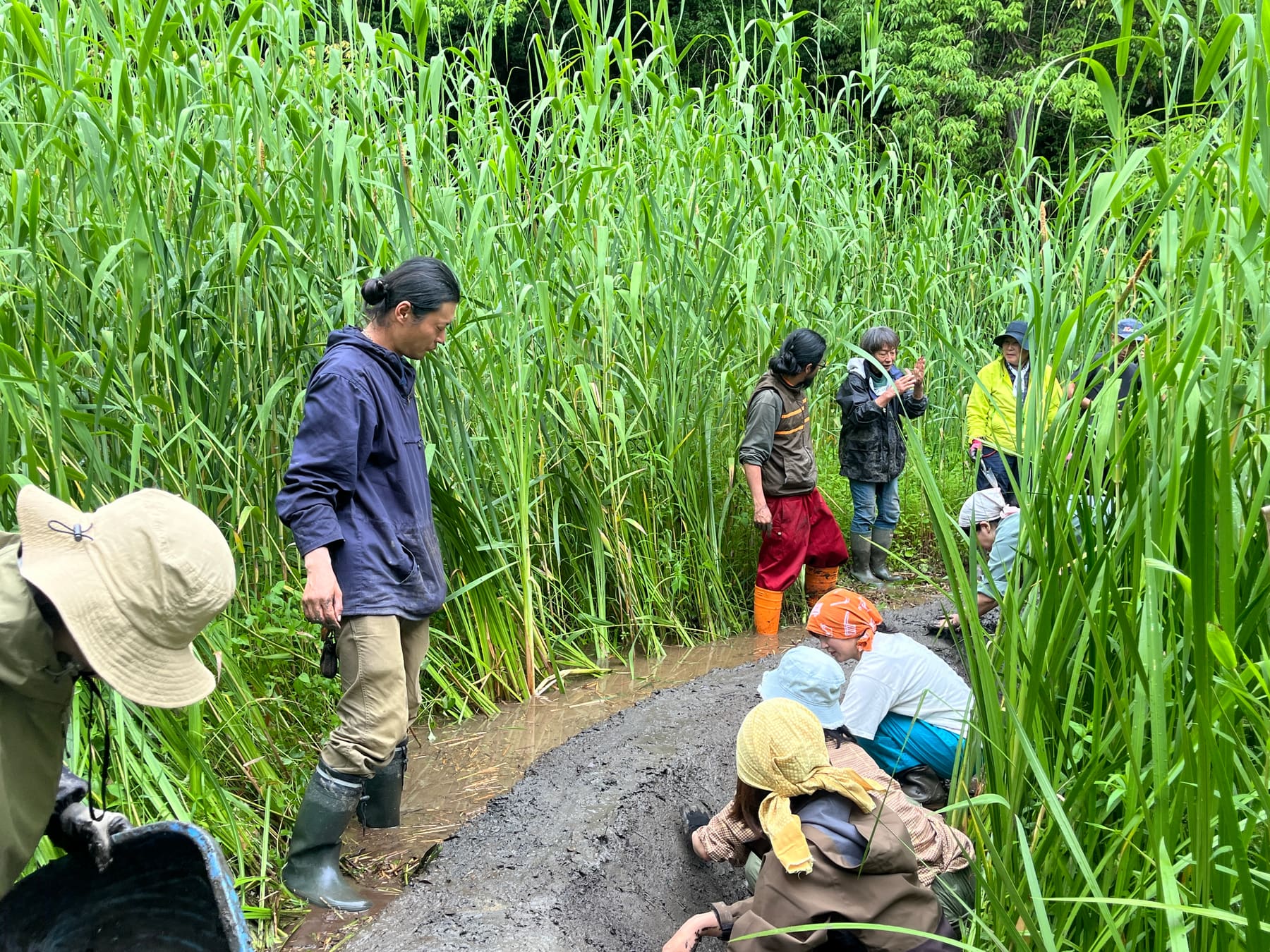
Koshimaki Project
Returning rice terraces abandoned for 50 years to wetlands that hold water even in winter.
- Area
- About 3 ha
- Status
- One of the 500 Important Satoyama
- Partners
- Kamiaoyagi district, Kanbayashi Sawmill
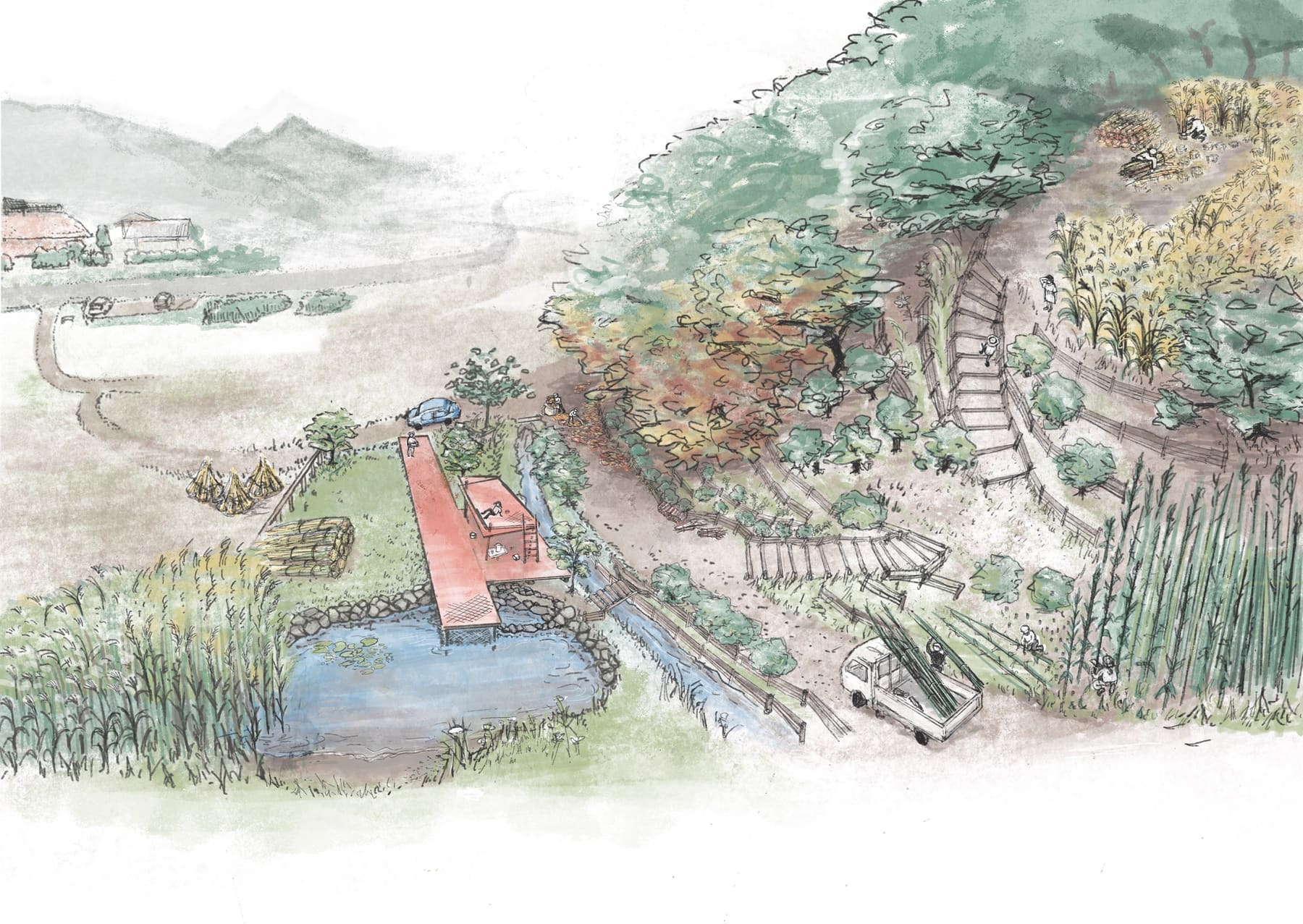
Four Seasons Material Yamaniwa
Abandoned terraces and woods, shaped into a garden to harvest materials, touch nature and take a walk.
- Also known as
- Maeyama Garden
- Award
- Green Environment Plan Grand Prize
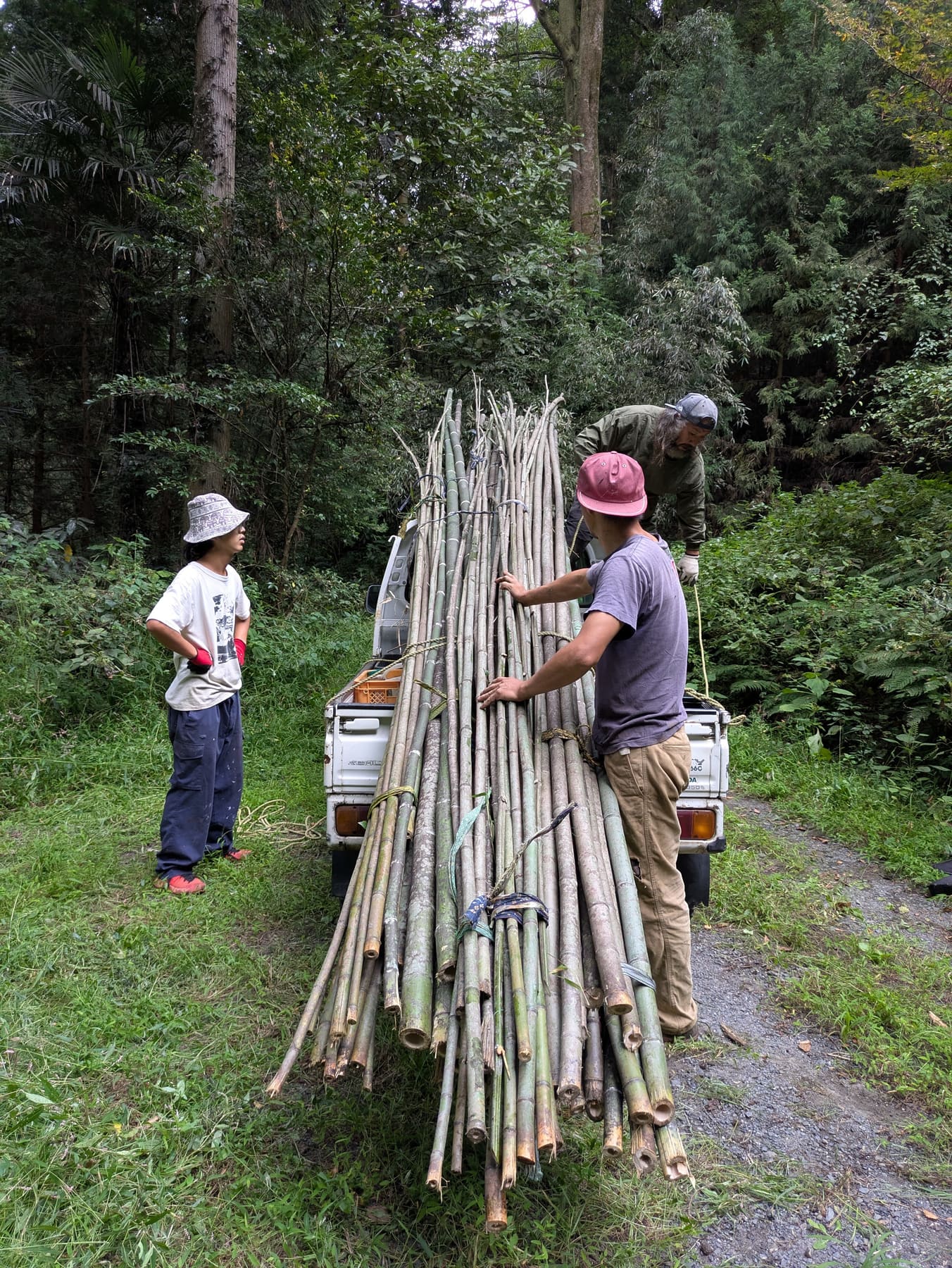
Satoyama Materials Distribution Center
A system connecting land suited to producing materials with work that needs them: the part of the Kamiaoyagi Model that handles the flow of materials.
- Funding
- Japan Fund for Global Environment
- Related
- Koshimaki Project, Material Yamaniwa